Before MyWhatIf was an organization, it was a question.
One person asked it. Then other people arrived with questions of their own, and built a foundation around them.
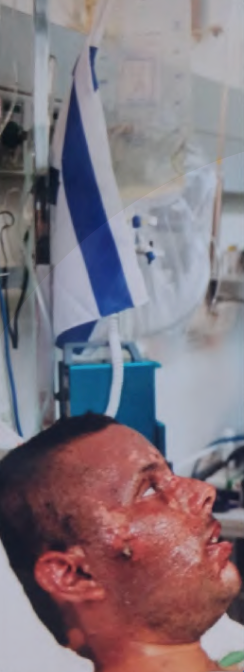
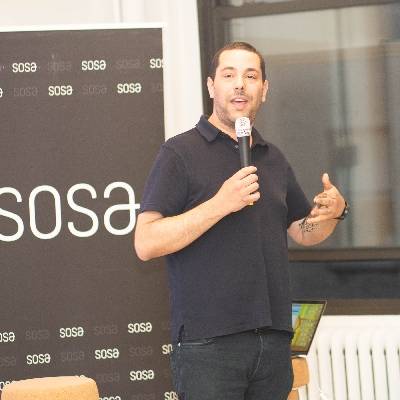
At twenty, our founder Omer Golan survived a suicide bombing. The physical injuries were catastrophic, but he lived.
He recovered physically. He built companies, art, a family and a life. The part that lasted longest had nothing to do with his body. PTSD left a deeper problem with the future: it was hard to feel that he had one. Every year, he was surprised to still be here.
After October 7, trauma he had compartmentalized reopened. Two questions emerged.
Why can a person know they have a future, and still not feel one?
If trauma changes the brain's operating system, can we rewrite the code?
Those questions became MyWhatIf. Trauma takes the future. We build the way back. What the question became →
MyWhatIf did not become a foundation because one person had an idea. It became one because other people saw something in it too.
Everyone brought a What If.
Nobody arrived for the same reason. People came because of a war, a patient, a study, a son, a friend they had lost, or a conviction that there had to be another way. Each of them showed up with a question of their own.
What if this could help a veteran who would never walk into therapy?
What if a young person could learn to imagine a future again?
What if we reached someone before hope disappeared completely?
What if help did not depend on where you live or what you can afford?
People chose to build it.
Before anyone knew exactly what it could become.
We did not build MyWhatIf for them. Many of us are them.
For a long time this was donated work. Expertise, time, and lived experience, given by people who thought the work should exist before there was any way to pay for it.
Many live with trauma, or love someone who does. Others arrived through clinical work, science, technology, philanthropy, ethics, law and social impact.
Shaped where the work has been most needed.
People, research and clinical experience have moved between these places to build it. MyWhatIf is intended to work across cultures, contexts and languages.
Where much of the early work has been shaped, drawing on lived experience of trauma recovery in a place where the need has been constant. Many of the people are from here.
Clinical, research and philanthropic relationships with universities, hospitals and funders. The Foundation is incorporated here.
Research and clinical collaboration with university and hospital teams. Contributors who have carried the work between places.
Trauma is not unique to any one country. The work is not either.
Trust requires alignment.
MyWhatIf may ask people to trust us with deeply personal parts of their lives. That trust should not depend on whether keeping someone engaged longer creates more revenue, or on how much of themselves an algorithm can extract.
We chose a nonprofit structure so the organization stays aligned with the Heroes it exists to serve, and with the work of helping them recover, regain agency and move forward.
What a nonprofit means for our Heroes.
Access to trauma recovery should not be settled by ability to pay, by geography, or by whether a population looks commercially attractive.
What a nonprofit means for who gets served.
Philanthropy funds the work now. It builds the evidence, safety, measurement and access that come first. Our goal is for MyWhatIf's core operations to become self-sustaining by 2030 through diversified, mission-aligned institutional revenue, while philanthropy continues to help expand access, research and replication. That is a goal, not a commitment or a forecast, and no single source of revenue is assured to get us there. Possible pathways include sponsored access, institutional and government partnerships, reimbursement where it is validated and authorized, and replication arrangements with mission-aligned organizations. None of this is settled.
Technology is only one part of recovery.
MyWhatIf is designed to work alongside human care, peer communities, researchers, clinicians and other forms of support. The system should know when technology is useful, when a person needs another person, and when a higher level of care is required.
Good intentions are not enough.
The people building MyWhatIf should never be the only people deciding whether we are getting it right. So the work is examined by people who know what can go wrong, and who are willing to say so.
Our Clinical Development Board brings together trauma-recovery clinicians and researchers, with affiliations including Columbia University, the New York State Psychiatric Institute and Sunnybrook. It helps define the intervention's clinical judgment model and safety protocols, and challenges assumptions, methodology, risk and evidence.
A small ethics, trust and accountability group challenges the organization on responsible technology, participant interests and the difficult decisions created by working on AI and trauma together. Its members include Richard Messing, CEO of the World Ethics Organization.
Studies are designed and conducted with university and hospital research teams under the appropriate institutional review processes. We do not mark our own homework.
A board of directors governs the Foundation, with expertise across trauma psychiatry, philanthropy, technology, nonprofit operations and international growth. Safety, privacy and regulatory compliance are treated as design decisions, not disclosures.
We are still early. And we say so.
Some of what we believe is supported by established research. Some we have observed in our own work. And some of the most important questions are exactly what our research partners are helping us test.
A world where trauma does not get the last word on someone's future.
A new model of trauma recovery, available to the people who need it, wherever they are.
MyWhatIf was built by people who asked whether something better was possible. We are still building it.
What if you helped?
Time, expertise, funding, research or clinical collaboration, technology, an introduction, access to a community that needs this. All of it is useful, and we would rather hear from you than guess.